Chatterie de Nice · Traditional Siberian
Siberian Cat Colours: red, tortie, white, blue and golden
Discover the main colours of the traditional Siberian cat
A Siberian cat can wear a warm, light or silver coat, solid or made of several shades. Here I present the most sought-after colours through my own cats and kittens. Colour catches the eye, but character and health always remain the most important.
Colour changes the first impression. It does not change what we require from the Siberian beneath the coat.
Chatterie de Nice · LOOF breeder since 2016
The brown tabby Siberian cat: the traditional wild colour
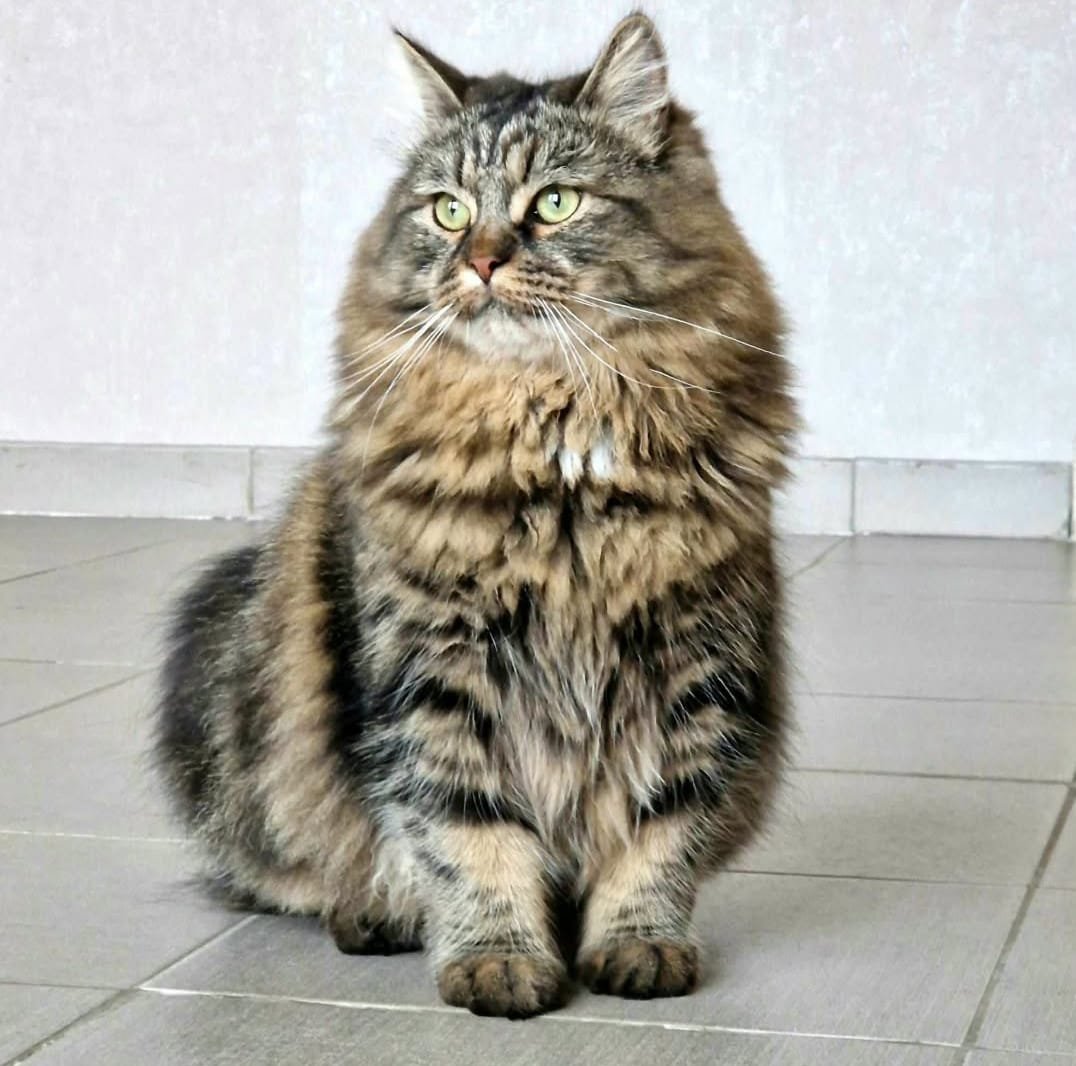
Tigru of Chatterie de Nice, brown tabby Siberian catThe brown tabby Siberian wears the traditional wild colour of the breed, with a tabby pattern that always remains visible. Tigru gives a powerful and natural image of it, with his large coat and his forest-cat bearing.
Read more
The natural colour of the Siberian cat
Brown tabby is one of the most emblematic colours of the traditional Siberian cat. Brown mixes with black and with warmer shades, while the stripes always remain visible on the body, legs, tail and face.
It is not a solid coat. The pattern is part of this colour and gives each cat a different appearance: some stripes are fine and numerous, others wider and more marked.
Tigru, the image of the traditional Siberian cat
Tigru is part of the history of Chatterie de Nice. His large coat, his ruff, his powerful body and his wild expression represent for us that very particular image of the traditional Siberian cat: a natural, robust and majestic cat whose beauty needs no rare colour effect to impress.
Brown tabby may be less spectacular at first sight than a golden, a silver or a white Siberian cat with blue eyes, but it has something special: it immediately recalls the forest cat whose bearing the Siberian still keeps today.
The red Siberian cat
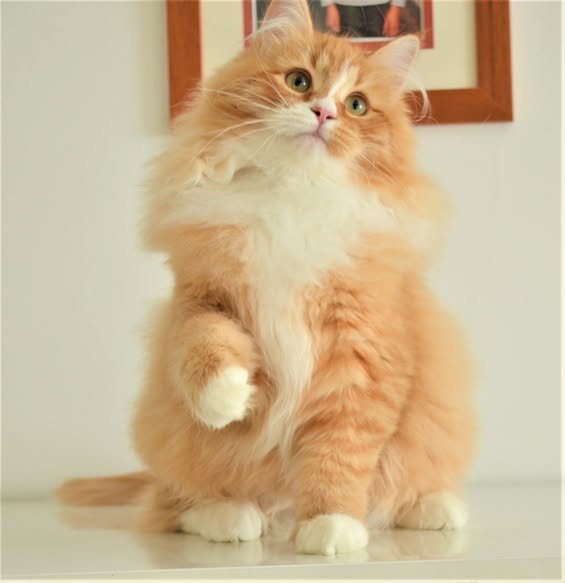
Enigma of Chatterie de NiceThe red Siberian cat has a warm and luminous colour, called red in breeding. Enigma stands out with a red and white combination that is particularly rare and spectacular.
Read more
The length and density of the Siberian coat give a lot of depth to red. The colour can look different depending on the light, the season and the development of the coat.
Red also appears in tortie and tricolour coats, where it combines with darker colours and sometimes with white.
Discover our red Siberian kittens (in French)Enigma, her story. Her red and white coat is precisely what makes her so recognisable: an uncommon, luminous combination, rich in contrast, which is part of her identity.
The tortie and tricolour Siberian cat
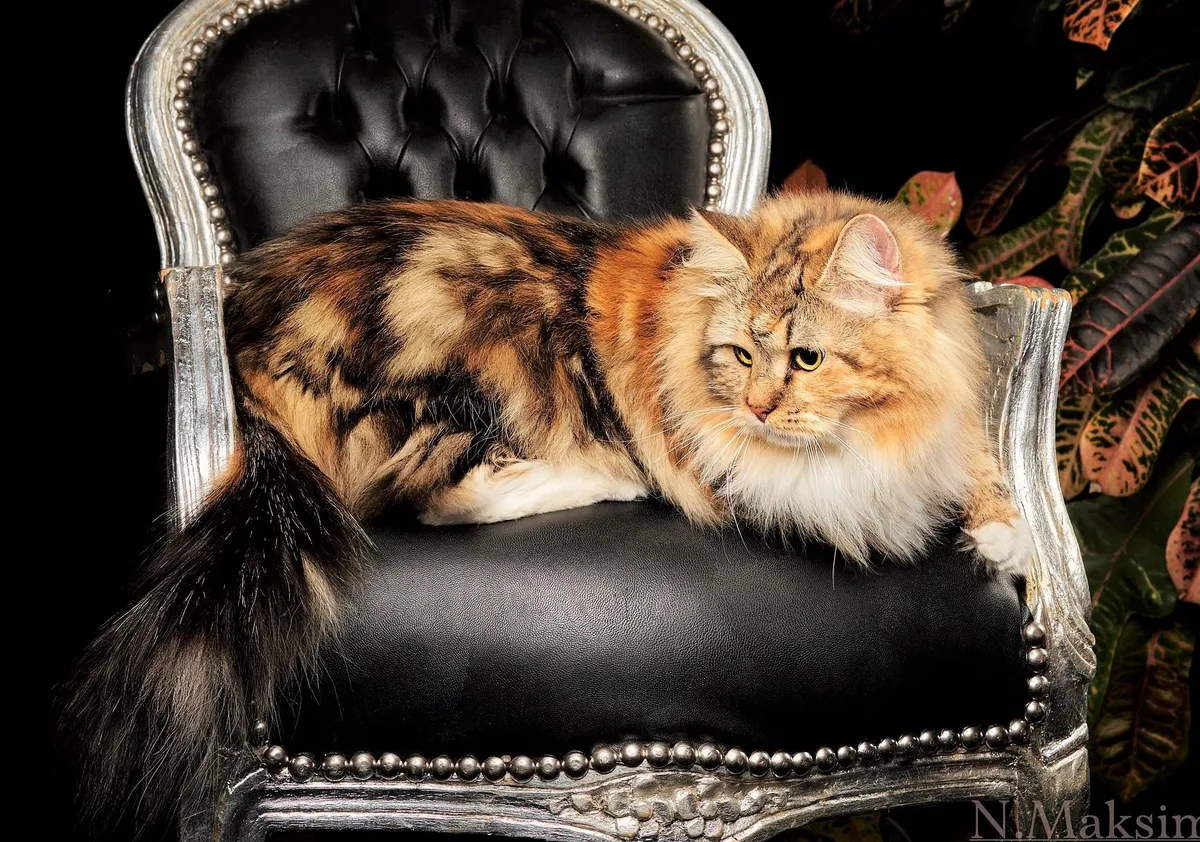
Iskra of Chatterie de NiceThe tortie tricolour Siberian cat mixes red or cream with darker shades, sometimes with white. In our photo, it is Iskra, a large Siberian female who came from Russia.
Read more
This beauty is also found in kittens. Some are luminous from birth; in others, the shades and contrasts become more intense over the weeks.
Each birth holds its own surprise: a luminous red, a small deep tortie, or a tortie with white whose patches form a different pattern.
Discover Afina and her brown tortie and white coat (in French)Iskra, her story. A large Siberian female who came from Russia, she finally had no kittens. Her life then took another path: she joined an elderly lady who lived alone and became a true member of her family.
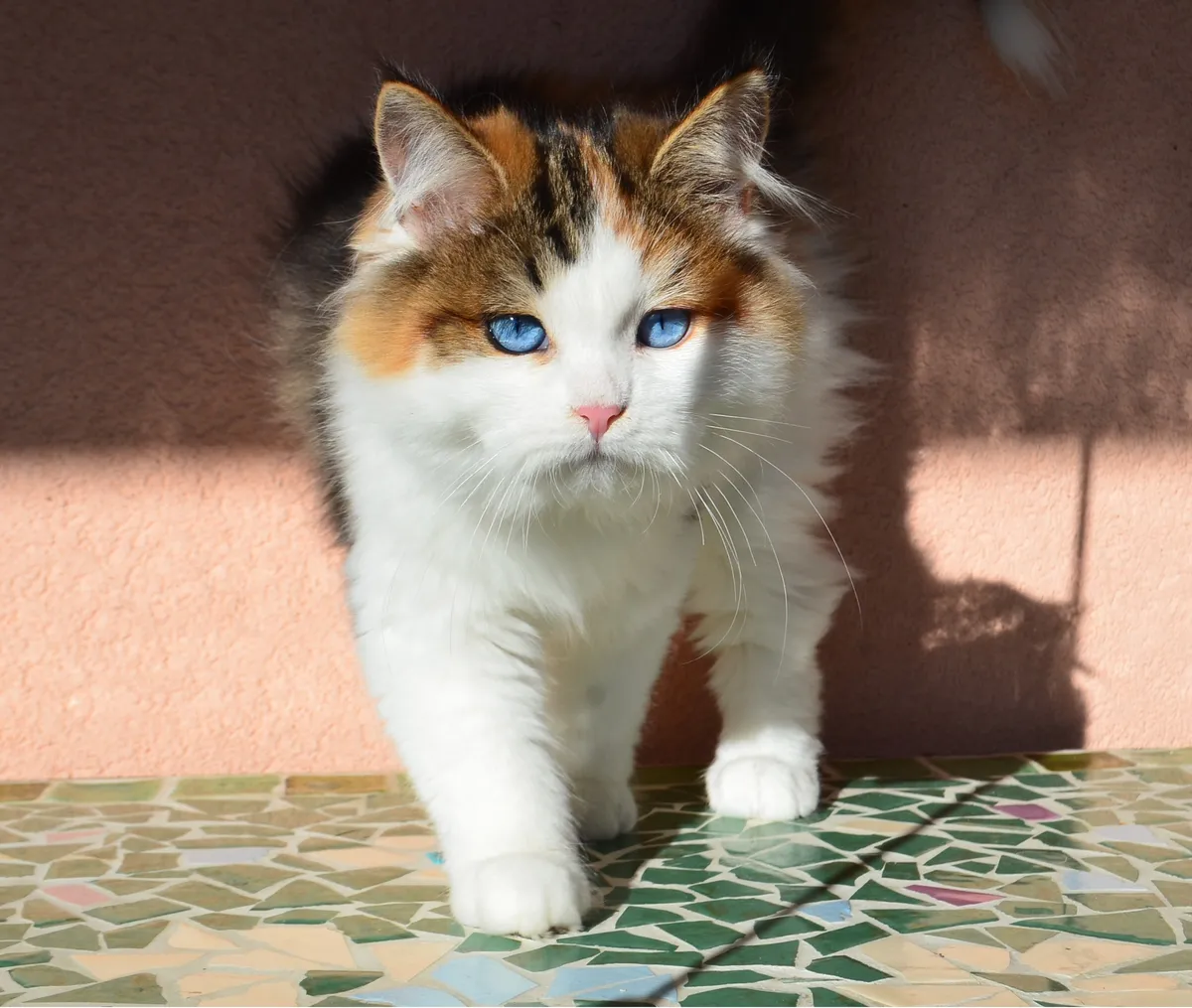
The coloured Siberian cat with blue eyes
Afina of Chatterie de Nice, tortie and white with blue eyesA coloured Siberian cat can also have blue eyes. Afina, tortie and white with blue eyes, illustrates this rare and immediately recognisable combination.
Read more
The beauty of a coloured coat with a blue gaze
The colours of the coat frame the eyes and strengthen their depth. Depending on the light, the blue can look very pale, deeper or almost transparent, while the red, brown and white also change in intensity.
Afina, tortie and white with blue eyes
Afina shows all the beauty of the tortie tricolour Siberian cat with a blue gaze. The different areas of her coat draw her face, and her eyes give her a gentle, lively and singular expression.
It is a beauty made of contrasts: a warm, expressive coat, luminous white areas and a light blue that naturally draws the eye. Every detail contributes to the harmony of her face.
See the LOOF standard of the Siberian cat (in French) Blue-eyed and odd-eyed Siberian cats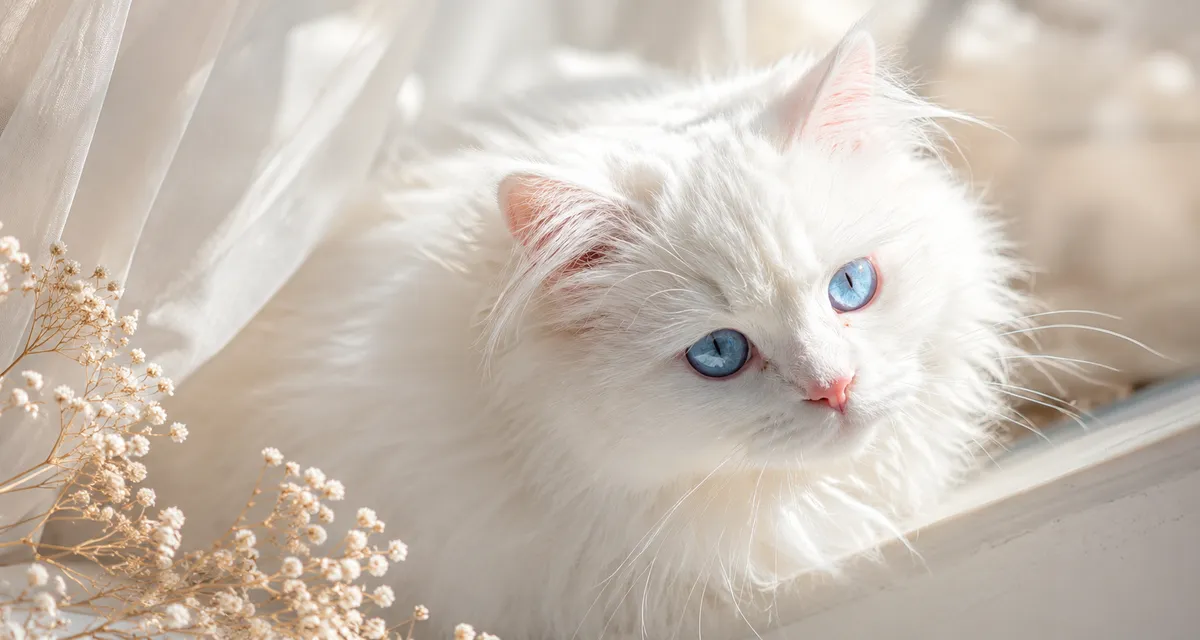
The white Siberian cat with blue eyes
Aura of Chatterie de NiceThe white Siberian cat with blue eyes combines a luminous white coat with a spectacular gaze. Aura won her family over with her sky-blue eyes and the charm and elegance they were looking for.
Read more
The family who welcomed Aura had already adopted from me a white Siberian female with green eyes. Today they are waiting for a third white Siberian female, this time with odd eyes.
Green eyes, blue eyes or odd eyes: the white coat stays luminous, but the colour of the gaze completely transforms the expression of the face.
Discover the white Siberian cat with blue eyes (in French)Aura, her story. Her family was looking for a Siberian cat combining beauty, charm and prestige. Aura won them over with her white coat, her sumptuous fur and above all her sky-blue eyes.
The silver shaded Siberian cat
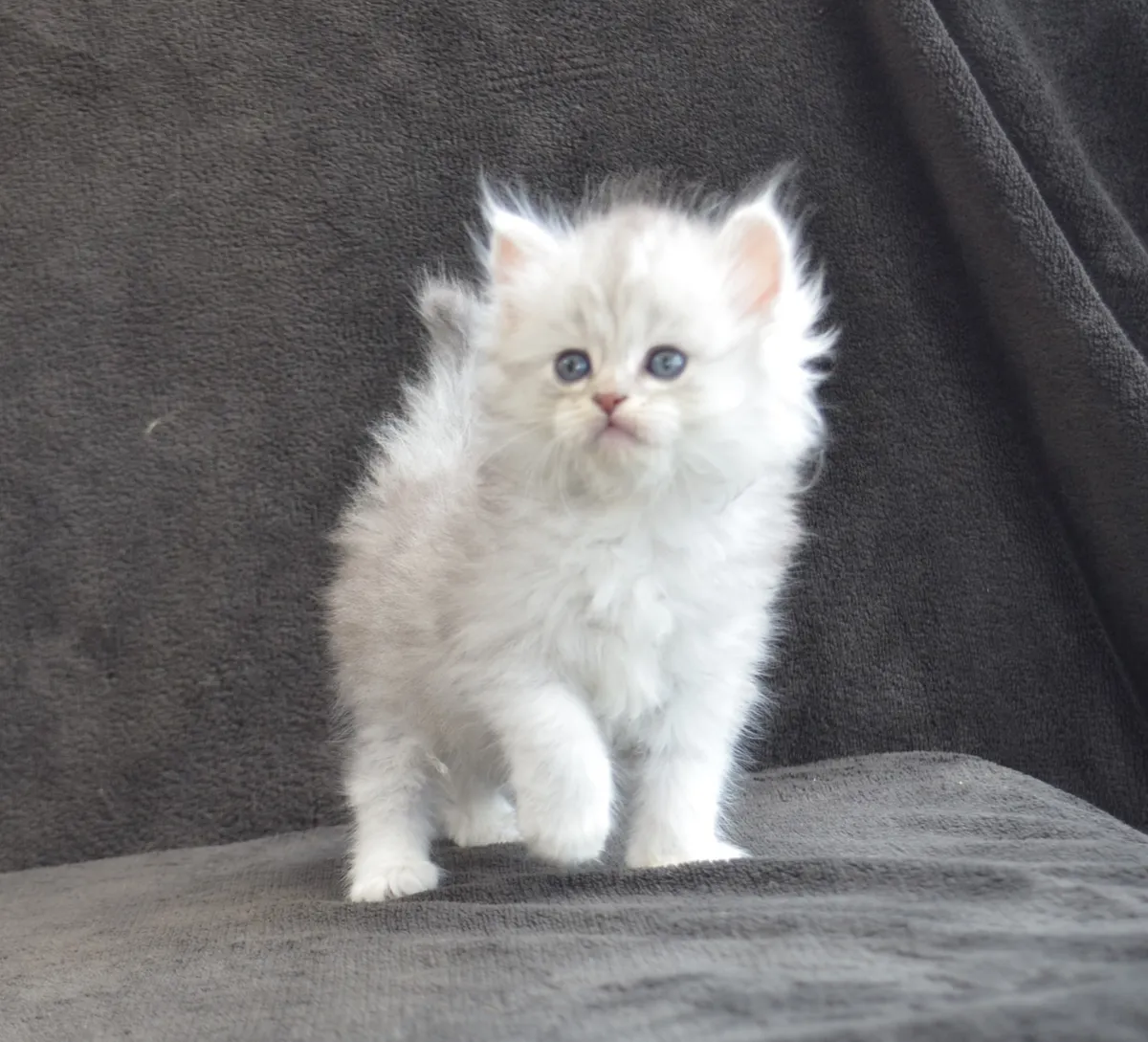
Bobby of Chatterie de NiceThe silver shaded Siberian cat has a light, silvery coat whose darker tips give it depth. Bobby was chosen by his family precisely for the originality and beauty of this colour.
Read more
Silver shaded is not revealed in a single day: some areas lighten, the shades become clearer and the balance between the light base and the dark tips becomes more visible.
Behind this eye-catching colour, Bobby remains above all a kitten with his own character, his way of playing and the bond he will create with his family.
Discover Bobby in his litter (in French)Bobby, his story. He then joined a wonderful family in Monaco.
The blue Siberian cat
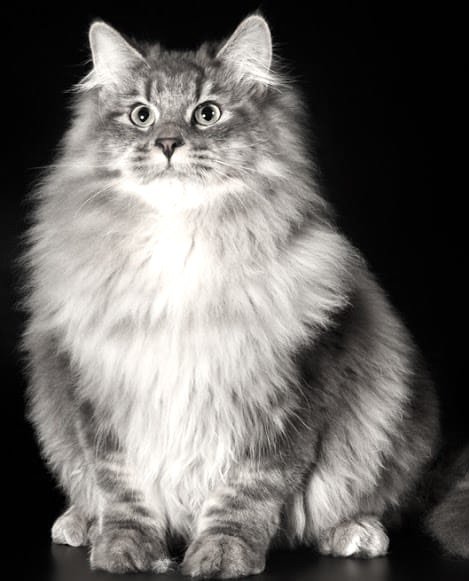
Finist, former Siberian cat of Chatterie de NiceThe blue Siberian cat has a coat with cool, deep shades. Finist is a huge Siberian cat of about 8 kg, whose power shows this colour off even more.
Read more
A blue coat can be solid, striped or combined with white. The density and length of the Siberian coat give this colour even more depth.
Blue should not be confused with silver. Blue is a grey-blue colour, while silver gives a silvery effect thanks to a very light base of the hair.
Discover Finist among our former breeding cats (in French)Finist, his personality. His size, his power and his abundant coat give him an immediately impressive presence.
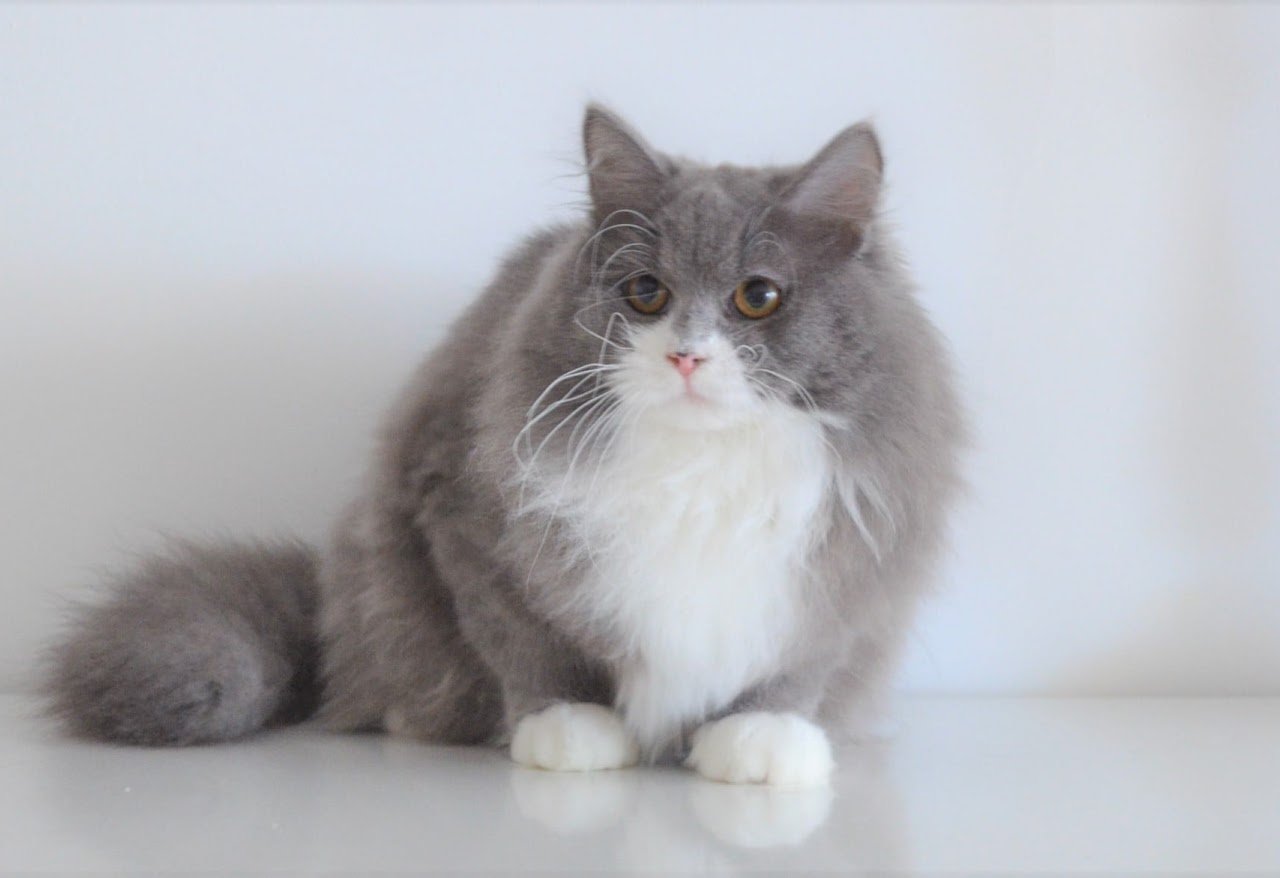
The solid Siberian cat: a plain coat without pattern
ISIS of Chatterie de Nice, blue solid femaleThe solid Siberian cat wears a plain coat without a visible pattern. In ISIS, blue solid is a rare colour whose evenness shows off all the richness of her coat.
Read more
Solid or tabby Siberian cat: what is the difference?
A tabby Siberian cat can be brown, blue, red, silver or golden, depending on its base colour. Its pattern can form fine stripes, wide swirls or spots. In a solid Siberian cat, the coat shows no such visible pattern.
Which colours can be solid?
Black solid and blue solid are the easiest examples to recognise. Blue is a dilution of black: it gives a soft, grey-blue and even shade. Solid therefore does not mean grey; the word only describes a coat without a visible pattern.
Why do we sometimes see faint stripes?
In some solid kittens, discreet “ghost markings” can appear in the coat. They are often more visible in strong light and can fade as the adult coat develops. This does not automatically make the cat a tabby.
A grey-blue Siberian cat can therefore correspond to several appearances: a blue solid without pattern, a blue tabby with stripes, or a blue with white. Looking at the real coat helps to tell colour and pattern apart.
Discover the colours and patterns of our breeding cats (in French)ISIS, her particularity. In ISIS, the absence of a visible pattern leaves all the room for this plain, deep coat.
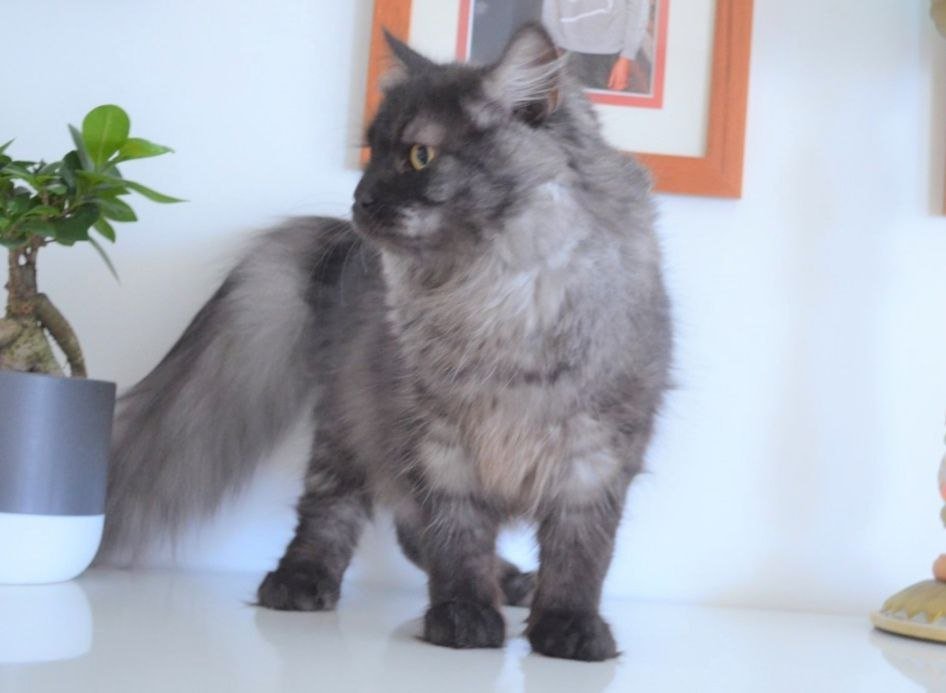
The smoke Siberian cat: a rare smoky effect
Elias of Chatterie de NiceThe smoke Siberian cat wears a rare colour: dark on the surface, it reveals a light base when the coat moves. In Elias, this smoky effect appears with great depth.
Read more
What is the difference between solid, smoke and silver shaded?
In a solid Siberian cat, the colour looks even down to the base of the hair. In a smoke, the tips stay coloured but the part close to the skin is light or silvery. Silver shaded is visually brighter: only a shorter part of the tip of the hair is dark.
Why does a smoke coat change with movement?
When the cat is still, the coloured tips cover the light undercoat. When it walks, plays or parts its long coat, the silver base appears and produces this characteristic smoky effect.
A rare and singular colour
Smoke does not always win people over at first sight. Its charm shows above all when the cat moves and the light undercoat appears under the darker tips. It is this changing contrast that gives this coat its very particular character.
Discover the rare colours and coats of our breeding cats (in French)Elias, his particularity. In Elias, the effect becomes particularly visible when his coat opens in movement.
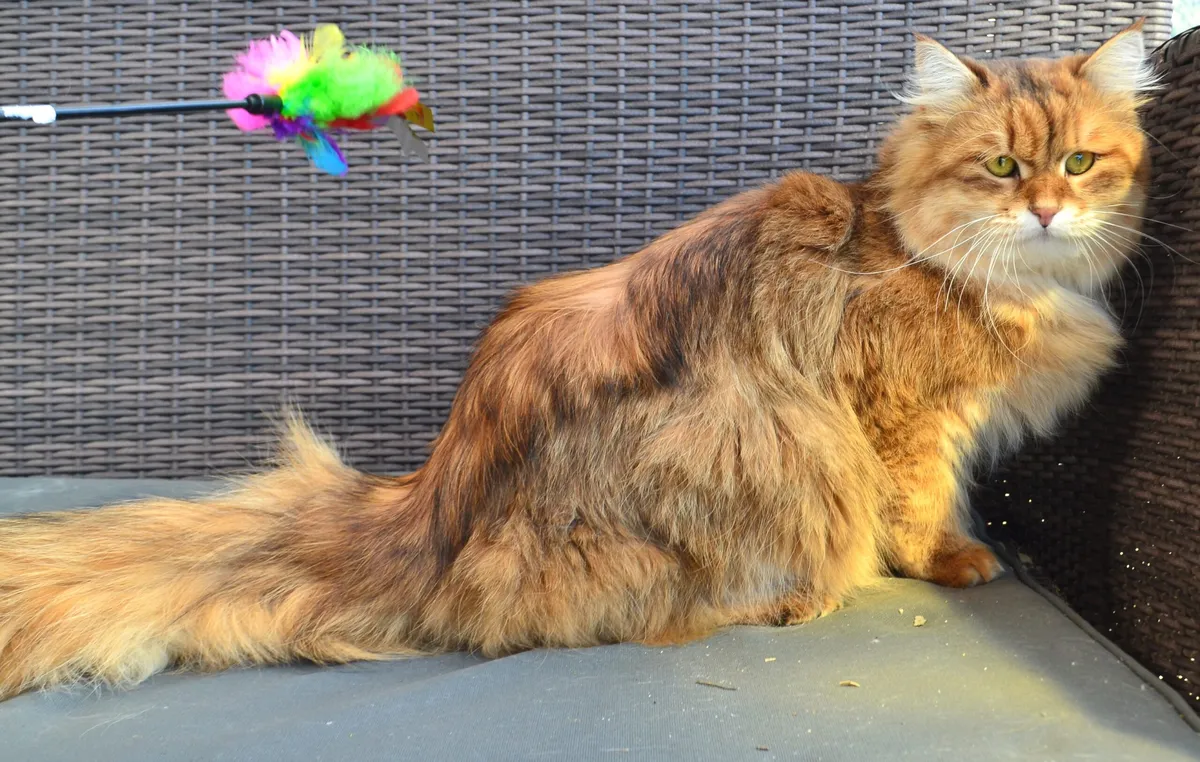
The golden Siberian cat
Ater of Chatterie de NiceThe golden Siberian cat has a warm and luminous coat, with a golden base and a darker pattern. In Ater, these shades gain even more depth in his abundant coat.
Read more
In the Siberian cat, golden can show different patterns and different intensities. Some coats look very light, others warmer and more contrasted.
Golden, sunshine and bimetal are three different expressions. At Chatterie de Nice, golden, sunshine and silver are present in our lines, but separately. Bimetal combines warm golden or sunshine shades with a silver effect in the same coat: it is a rare coat, and we do not have a bimetal Siberian cat.
Discover Ronda and her sunshine coat (in French) See the colours of our founding parents (in French)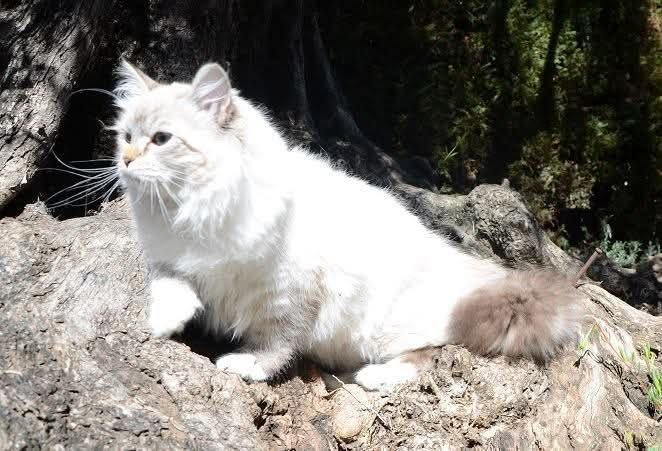
The Neva Masquerade: a colourpoint close to the Siberian cat
The Neva Masquerade is also part of the Siberian breed. Its colourpoint coat has darker extremities and blue eyes, offering another expression of the diversity of the breed.
Read more
How to recognise a Neva Masquerade?
Among the colours and appearances of the Siberian cat, the Neva Masquerade has a particular place. Its mask, ears, legs and tail show deeper shades, contrasting with the lighter parts of the coat.
This variety is part of the world of the Siberian cat and naturally completes this presentation of its many colours. At Chatterie de Nice, our selection is devoted to the traditional Siberian cat; the Neva Masquerade is presented here to show the diversity of the breed as a whole.
Neva Masquerade and traditional Siberian cat: the difference (in French)The tabby patterns of the Siberian cat
Mackerel, blotched or spotted: three patterns on the same coat
Tabby is not a colour but a pattern, which lies on the base colour of the coat. All tabbies have an “M” on the forehead.
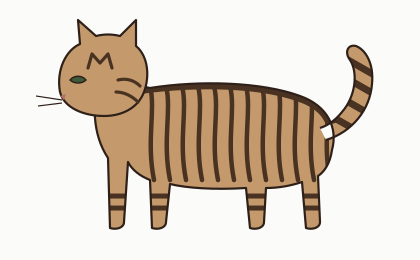
Mackerel
Fine parallel stripes on the flanks. Example: Ater, golden brown mackerel tabby.
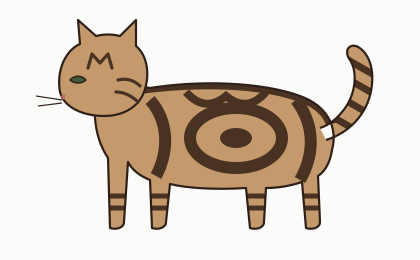
Blotched
Wide target-shaped swirls on the flanks. Example: Amethyst, brown blotched tabby with blue eyes.
Discover Amethyst (in French)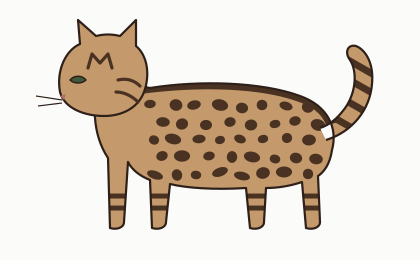
Spotted
Stripes broken into spots. Example: Athena, black silver spotted tabby with blue eyes.
Discover Athena (in French)A great diversity of colours in the Siberian cat
The main colours and coat expressions found in the breed
The Siberian cat exists in many colours and coat expressions: white, black, red, cream, blue, brown tabby, silver, silver shaded, tortie, tricolour, golden, sunshine or bimetal, with or without white. This page presents the colours of the Siberian cat in a general way, to help families understand the main terms used.
Chocolate, lilac, cinnamon and fawn are not accepted by the LOOF standard of the Siberian cat.
Siberian cat standard (in French) Siberian Cat Breeder in Europe
The photographs of my cats and kittens give real examples of several coats present at Chatterie de Nice. They do not mean that all the colours mentioned on this page are currently represented among our breeding cats or our kittens.
Our cattery shows a great diversity of colours, including golden, sunshine, silver, white, red and tortie.
The exact colour and EMS code of an individual kitten are established according to its actual characteristics; we do not identify an EMS code from appearance alone when it has not yet been confirmed.
Frequently asked questions about Siberian cat colours
Short answers and real examples from Chatterie de Nice
How is the colour of a Siberian cat defined?
The colour of a Siberian cat includes the base colour, the pattern of the coat, the presence of white or a particular effect such as silver. To understand how a cat looks, these elements must be read together, and the development of its coat observed.
See the colours of our breeding cats (in French)Does a white Siberian cat always have blue eyes?
No, not always. A white Siberian cat with blue eyes combines two different characteristics: a white coat and a blue gaze. A white Siberian can also have green or odd eyes, and blue eyes are not reserved for white coats.
See our white Siberian cats (in French)Tortie or tricolour: what is the difference?
The tortie Siberian cat wears a coat where several colours meet. The word tortie means tortoiseshell; the word tricolour is commonly used when white is added to the red and dark areas.
See our Siberian females (in French)Grey, blue or silver Siberian cat: what is the difference?
For a Siberian cat, the word grey often describes a visual impression. In breeding, blue is a precise grey-blue colour, which should not automatically be confused with a silver coat.
See our former breeding cats (in French)Golden, sunshine and bimetal: are they the same?
No, these colours must be told apart. We have golden, sunshine and silver in our lines, but no bimetal combining these expressions in the same coat. This mention is deliberately kept for transparency.
Discover Ronda, sunshine female (in French)Every Siberian cat has its own colours
And behind each colour, a personality and a story to discover
At Chatterie de Nice, I see the colours appear from birth and then change week after week. But beyond the coat, I discover above all the character of each kitten and the little personality that makes it different from all the others.
Colour can naturally influence a family’s preference, but it is not the first criterion in our breeding decisions. Whether white, tabby, silver, red or tortie, our Siberian cats are selected according to the complete animal and its pedigree.
If a kitten particularly touches you, you can discover our Siberian kittens for sale or contact Chatterie de Nice directly.