Chatterie de Nice · Siberian cats and allergies
Are Siberian cats hypoallergenic?
Allergies, Fel d 1 and daily life
In short: no Siberian cat is totally hypoallergenic. Some Siberian cats may produce less Fel d 1 than other cats, but every cat produces allergens, and the reaction depends both on the person and on the cat.
I am allergic to cats myself, and allergy tests confirmed it. This question is part of my daily life and of my experience as a breeder since 2016.
Chatterie de Nice · LOOF breeder since 2016
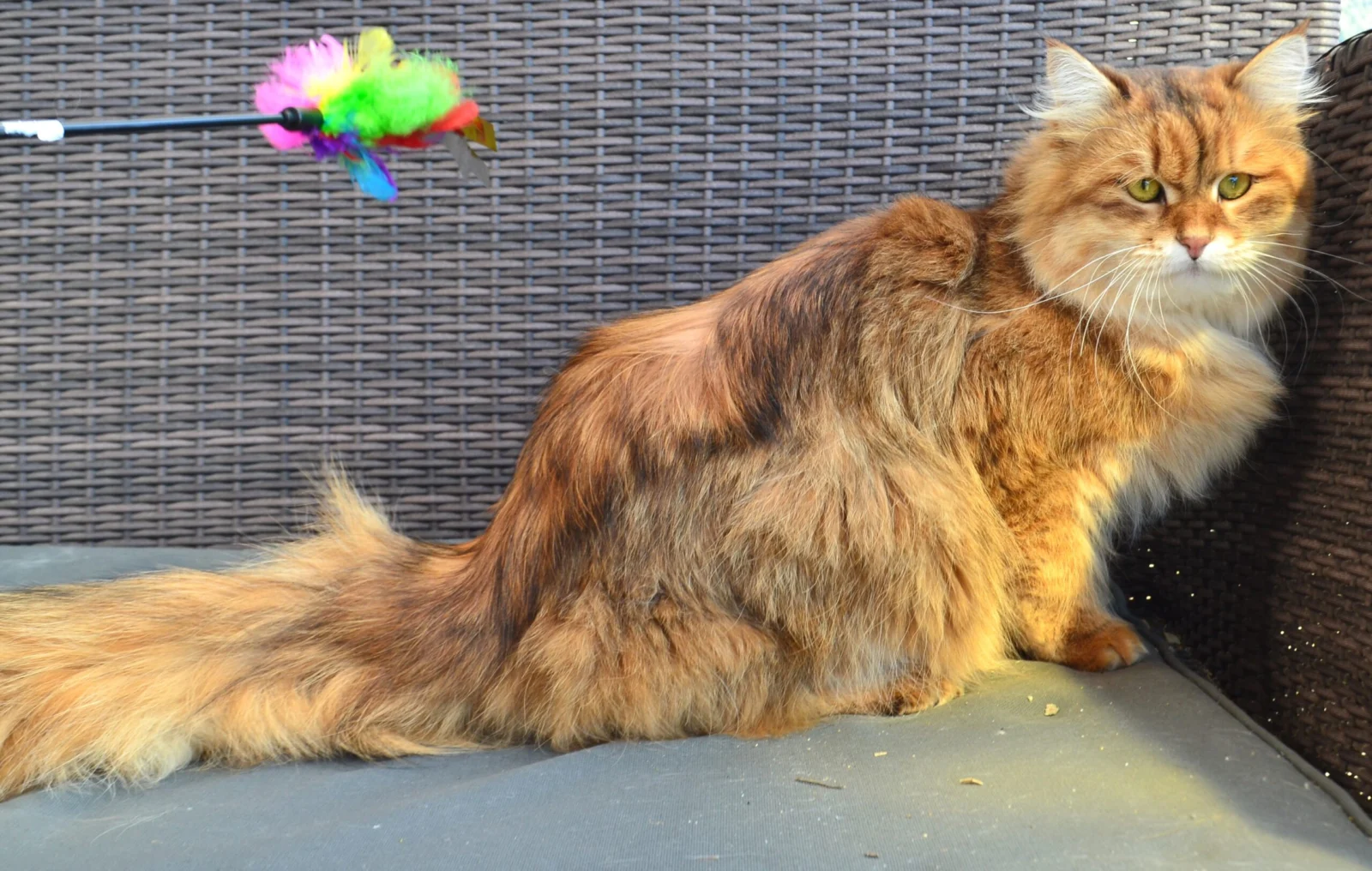
Ater of Chatterie de Nice, golden brown mackerel tabby Siberian cat with a flowing, well-structured coat
What is Fel d 1 and what causes a cat allergy?
Saliva, hair, dander and undercoat
Two types of reaction can be triggered by cats:
- allergy to saliva (the Fel d 1 protein), the most common one, responsible for asthma, sneezing and itchy eyes;
- allergy to hair, dander and undercoat, linked to particles floating in the air.
| Type | Cause | Symptoms |
|---|---|---|
| Saliva (Fel d 1) | Protein in the saliva, spread onto the coat | Sneezing, asthma, itchy eyes, runny nose |
| Hair, dander, undercoat | Particles floating in the air | Cough, blocked nose, skin irritation |
Good to know: Fel d 1 is one of the main cat allergens, and its production varies from one cat to another. This is why the search for a hypoallergenic cat cannot be limited to the breed: hair and dander can also make symptoms worse.
A LOOF pedigree confirms the origin of a cat and its membership of the breed. It does not tell how much allergen a cat produces, and it does not predict the reaction of an allergic person.
Traditional Siberian or Neva Masquerade: allergies and coat differences
My experience as a breeder who is allergic herself
My position on the Neva Masquerade: I do not recommend the Neva Masquerade to allergic people. This position is based on my personal experience as a breeder and as an allergic person.
When I still bred Neva Masquerade cats, my allergic reactions were persistent. Their very dense and fluffy coat also held a lot of dust, to which I am allergic as well. For me, this combination was particularly difficult in daily life.
My experience is different with the traditional Siberian lines I select today. This is one of the reasons why I gave up the Neva Masquerade and chose to devote myself exclusively to the traditional Siberian cat.
| Traditional | Neva Masquerade | |
|---|---|---|
| Coat | More flowing and less fluffy in the lines I select | Very dense and fluffy in the cats I have known |
| My observation | A more favourable personal experience with my traditional lines | A coat holding a lot of dust and persistent allergic reactions for me |
| My position | The type of Siberian I devote myself to today | I do not recommend it to allergic people |
This is my personal experience and my position as an allergic breeder. It is not a medical rule that applies to every Neva Masquerade or to every allergic person.
How do I select the coat of my Siberian cats?
A silky, flowing, structured coat with a controlled undercoat
Being allergic myself and not tolerating an abundant, persistent down, I select the quality and structure of the coat of my breeding cats very strictly. I regularly bring in cats from other catteries to diversify my lines.
When a newly arrived female immediately shows a down that does not meet my criteria, I plan a single mating with one of my males and keep from that litter a kitten with the coat quality I am looking for. The female is then spayed and leaves my breeding programme for good.
This selection does not allow me to promise a hypoallergenic Siberian cat. It allows me to bring new genetic diversity while keeping the coat quality I look for.
To diversify my lines, I have acquired breeding cats from catteries located in the Czech Republic, Russia, Poland and Italy. The real quality of a coat is not always visible in photographs, so I assess it carefully as soon as the cat arrives.
Why is a short visit to a cattery not a reliable allergy test?
A test in a cattery is not real life
Many allergic people wish to test their reaction by visiting a cattery. This method is not reliable and can be misleading:
- breeding cats are not neutered, so their Fel d 1 level is higher than that of a neutered kitten;
- the contact time is too short (30 minutes to one hour) to trigger a representative reaction;
- you are not testing your future kitten, but an adult cat, often different in terms of allergens;
- stress and an unfamiliar environment can change the reactions.
You adopt a neutered or spayed kitten, and its allergen level will be different from that of adult breeding cats.
We do not offer test visits for allergic people.
Can a medical allergy test predict my reaction to a Siberian cat?
Blood test, specific IgE, skin prick test
Allergy tests carried out by a doctor or an allergist can confirm or clarify a cat allergy. I have had them myself, and my allergy was confirmed.
An allergist may suggest a blood test (specific IgE, including IgE to Fel d 1) or a skin prick test. However, these tests cannot guarantee tolerance to a particular Siberian cat.
A medical test can confirm an allergy, but it cannot be used to choose a hypoallergenic cat with certainty, nor to predict the reaction to a particular future kitten. The reaction to a Siberian cat remains individual.
Living with a Siberian cat when you are allergic, sensitive or asthmatic
Living together is very different from a few minutes of contact
Being allergic to cats and dogs myself, I have observed that reactions change differently from one person to another.
Symptoms often appeared when a new animal arrived, then decreased after a period of adaptation.
But this is not a rule:
- some people get used to their cat over time, and their symptoms decrease;
- others develop an allergy after several months or years of living together.
Everyday habits can help reduce allergens in the home: regular cleaning, an air purifier, and keeping the cat out of the bedrooms.
To assess your own situation, the advice of an allergist remains the most reliable step.
Siberian cats and allergy: my personal experience as an allergic breeder
My reactions, my observations and what years with my Siberians have taught me
I am allergic to cats and dogs, without being asthmatic. Allergy tests confirmed my allergy. At first I simply thought I had a cold; a doctor then explained that it was an allergy. For me it shows as sneezing, a runny or blocked nose, watery eyes and, above all, strong itching of the eyes.
I live every day in contact with my Siberians, and my own sensitivity lets me observe directly how I react to the cats of my cattery. This is also one of the reasons why I chose the Siberian cat and built my selection around this breed, without ever presenting a Siberian cat as a guaranteed hypoallergenic cat.
When I welcome a new cat from another cattery, my allergic symptoms usually appear as soon as it arrives. I start by washing it, and I often feel a first improvement after the bath.
I then gradually move it to the Purizon food I use in my cattery. I also notice a change in its digestion, with stools that are usually less smelly. About two weeks after its arrival, my body seems to have adapted and I usually no longer feel my symptoms.
I cannot say whether this change is caused by the bath, the food or another factor. I only share what I observe myself. For any allergic person, the advice of a doctor or an allergist remains the most reliable step.
In all my years of breeding, I have known one particularly difficult case: a lady had adopted two kittens, but her husband suffered from asthma. In the end she had to find other families for them.
Earlier, when I still bred Neva Masquerade cats, my own allergic reactions stayed persistent with them. A young woman also reacted strongly to their very abundant, ever-present down.
This is my personal experience as an allergic breeder. My own reaction cannot predict another person’s reaction, and it is not a medical test for adopting families.
Is a Siberian cat a good choice for an allergic person?
What to understand before adopting
A Siberian cat can be an option for some allergic people, but no hypoallergenic cat can guarantee the absence of a reaction. A hypoallergenic cat is not a cat that will never cause a reaction.
My personal experience with the traditional lines I select is positive. I do not recommend the Neva Masquerade to allergic people, for the reasons explained above.
I advise taking into account the sensitivity of the person, whether the allergy is to saliva or to hair, and the characteristics of the cat. In case of allergy or asthma, the advice of a doctor or an allergist is essential.
We talk with families all over France, in Europe and abroad. Whatever the distance, a serious medical assessment is needed before any adoption when someone in the household is allergic or asthmatic.
Scientific sources on Fel d 1 and Siberian cats
What research says and what comes from my own experience
Current scientific knowledge confirms that Fel d 1 is one of the main cat allergens and that its production can vary between individual cats. Research on Siberian cats also shows that the idea of a hypoallergenic Siberian cat remains complex and does not predict individual tolerance to a particular cat.
General information on cat allergy and Fel d 1 is based on available scientific knowledge. Observations about my own cats, their coats and my lines come from my personal experience as an allergic breeder.
- Bonnet B. et al. (2018), An update on molecular cat allergens: Fel d 1 and what else? Chapter 1: Fel d 1, the major cat allergen.
- Sartore S. et al. (2017), Polymorphism Analysis of Ch1 and Ch2 Genes in the Siberian Cat.
- Demoly P. et al. (2026), Allergy to Cats: Current Perspectives and Therapeutic Options.
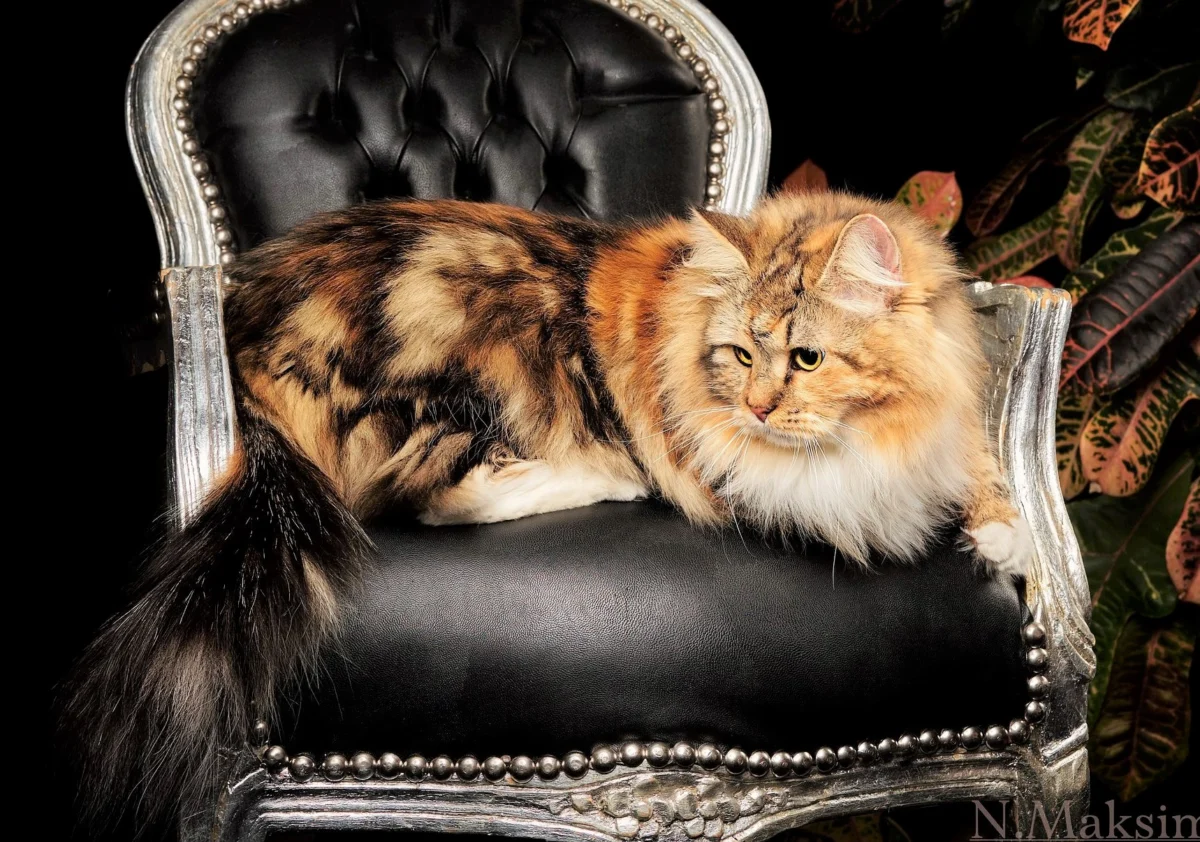
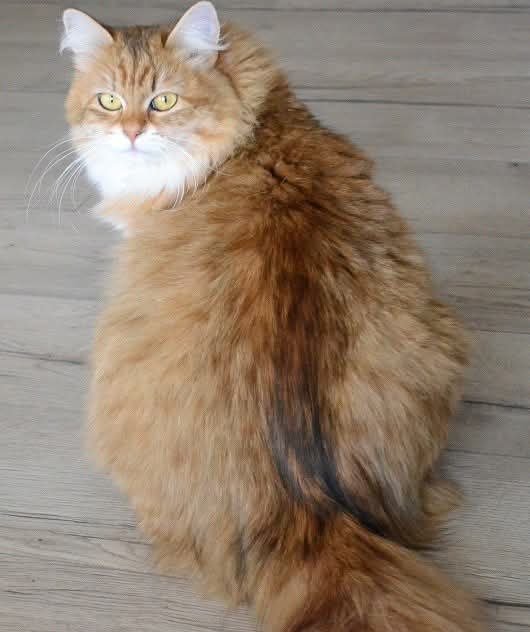
The coats of our traditional Siberian cats
Current breeding cats and earlier lines
FAQ: Siberian cats, allergy, Fel d 1 and asthma
Short answers to the most frequent questions
Are Siberian cats totally hypoallergenic?
No. Some Siberian cats may produce less Fel d 1 than other cats, but all cats produce allergens and no tolerance can be guaranteed.
Can I live with a cat if I have asthma?
Some asthmatic people tolerate Siberian cats, but every case is different. Ask your doctor.
Can I get used to my cat?
Some people develop a tolerance over time, others see their symptoms appear or get worse.
What should I do if I am allergic?
See an allergist. A blood test or a skin test can confirm or clarify an allergy, but it cannot predict with certainty your reaction to a particular future kitten.
What is the difference between a traditional Siberian and a Neva Masquerade?
In my personal experience as an allergic breeder, my reactions were persistent with Neva Masquerade cats, and their very fluffy coat held a lot of dust, to which I am also allergic. This is why I do not recommend them to allergic people.
西伯利亚猫与过敏
Fel d 1 与日常生活
没有任何一只西伯利亚猫是完全低过敏的。有些西伯利亚猫产生的 Fel d 1 可能比其他猫少,但所有的猫都会产生过敏原,过敏反应取决于人,也取决于猫。
我本人对猫过敏,过敏测试也已证实。我自 2016 年起繁育传统西伯利亚猫。我不向过敏人士推荐涅瓦假面猫(Neva Masquerade)。如有过敏或哮喘,请在领养前咨询医生或过敏专科医生。
Continue reading
Our Siberian cats and kittens
Siberian Cat Breeder in Europe →Blue-eyed and odd-eyed Siberian cats →International delivery of a Siberian kitten →Contact Chatterie de Nice →